Kashmir in Every Season: The Month-by-Month Guide to Planning the Perfect Trip
“If there is paradise on earth – it is here, it is here, it is here.” Amir Khusro wrote those words about Kashmir. But here is what he left out: that this paradise reinvents itself, completely, four times a year.
Most travel guides will tell you there is a single “best time” to visit Kashmir. That is wrong. The truth is more interesting – Kashmir is not one destination. It is five different destinations wearing the same name, each revealing a completely different face of the valley depending on when you arrive.
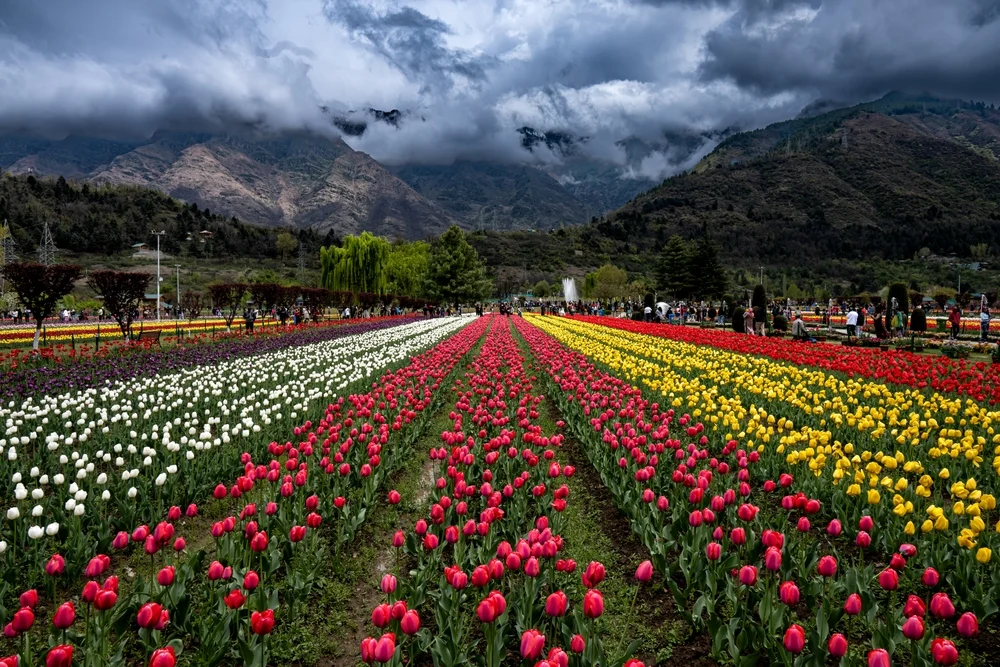
The Kashmir of April, when 1.8 million tulips bloom against snow-capped peaks, looks nothing like the Kashmir of October, when centuries-old Chinar trees explode in crimson and gold, or the Kashmir of January, when Gulmarg’s powder slopes rival the Alps and Dal Lake glazes over with frost. All of them are extraordinary. All of them are right – for different kinds of travellers.
This guide breaks down every season, every month, with honest detail: the temperatures, the crowd levels, the costs, the experiences that define each window, and – crucially – which season is made for you.
Kashmir at a Glance: All Seasons Compared
Before we dive deep into each season, here is the complete at-a-glance comparison that answers the most common question: which month should I book?
| Season | Months | Temp Range | Crowd Level | Cost | Best For |
| 🌷 Spring | Mar – May | 8°C – 22°C | Medium–High | ₹₹₹ | Flowers, photography, first-timers |
| ☀️ Summer | May – Aug | 15°C – 30°C | Peak | ₹₹₹₹ | Families, trekking, houseboats |
| 🌧️ Monsoon | Jul – Sep | 15°C – 28°C | Low | ₹₹ | Budget travellers, lush greenery |
| 🍂 Autumn | Sep – Nov | 8°C – 22°C | Low–Medium | ₹₹₹ | Photographers, honeymooners, culture |
| ❄️ Winter | Dec – Feb | -10°C – 8°C | Medium | ₹₹₹ | Snow lovers, skiers, romantics |
🌷 SPRING | March · April · May “The valley doesn’t just bloom. It erupts.”
Kashmir Spring Weather at a Glance
| 8–22°C Day Temp | 2–8°C Night Temp | Low–Med Crowd Level | ₹₹₹ Price Index |
This is Kashmir at its most theatrical. From mid-March, the valley transitions with staggering speed – snow-covered mountains give way to flower-draped hillsides, frozen lakes thaw into shimmering mirrors, and every terrace, garden, and meadow detonates with colour.
The crown jewel is the Indira Gandhi Memorial Tulip Garden – Asia’s largest tulip garden in Srinagar. In 2026, it opened on March 16 with 1.8 million tulip bulbs across 70+ varieties, drawing over 57,000 visitors in its first week alone.
Best For:
- First-time visitors
- Photographers
- Honeymoon couples
- Families with children
- Flower enthusiasts
Top Kashmir Spring Experiences
- Indira Gandhi Tulip Garden (Mar 16 – mid-Apr)
- Shalimar & Nishat Mughal Gardens in bloom
- Cherry blossom walks in old Srinagar
- Gulmarg snow still on slopes (gondola running)
- Daffodil fields at Yusmarg
- Dal Lake shikara sunrise rides
| 🌿 Spring Pro Tips – From Local Guides Visit the Tulip Garden at 7–9 AM on weekday mornings – fewer crowds, golden light, fuller blooms Book flights and hotels 6–8 weeks ahead – April is peak demand and prices climb fast May is the sweet spot for budget travellers – flowers fading but meadows emerald, crowds thinning, prices lower Gulmarg in April still has excellent snow – combine tulips and gondola in one trip Carry a light rain jacket – April afternoons see occasional showers |
Month-by-Month: Spring
| Month | What’s Happening | Avg Temp | Crowd | Best Activity |
| March | Tulip Garden opens, almond blossom, end of winter chill | 10–18°C | Low | Tulip Garden, early photography |
| April | Full bloom – tulips, gardens, Gulmarg snow | 12–20°C | Medium–High | Everything – best overall month |
| May | Meadows green, flowers receding, families arriving | 16–25°C | High | Houseboat, Pahalgam, family trips |
☀️ SUMMER | June · July · August “While the rest of India melts, Kashmir is a cool, lush paradise.”
Kashmir Summer Weather at a Glance
| 15–30°C Day Temp | 10–18°C Night Temp | Peak Crowd Level | ₹₹₹₹ Price Index |
While most of India is gasping through 40°C+ heat waves, Kashmir sits serenely between 15°C and 30°C – cool, green, and welcoming. It is no surprise that summer is Kashmir’s peak tourism season, drawing the largest crowds of any time of year.
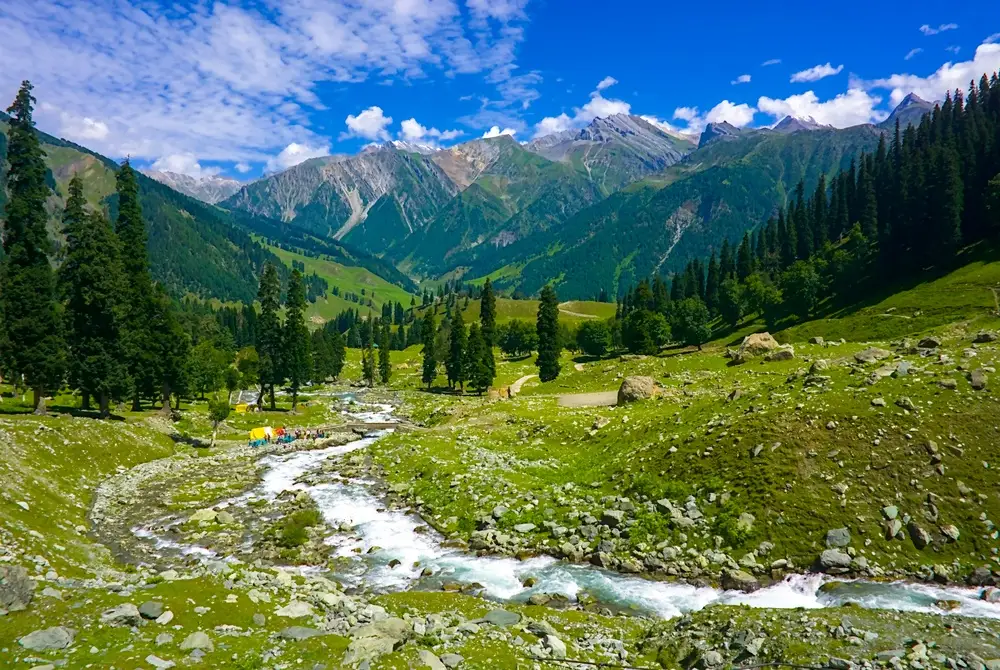
The meadows of Gulmarg and Pahalgam are at their most dramatically green. The Sonamarg glacier is accessible. Every road, every gondola, every trek is open. Families from across India come here to escape the heat, stay in Dal Lake houseboats, and let children play in meadows that look like they were lifted from a Swiss Alps postcard.
Best For:
- Families with children
- Trekkers & hikers
- Houseboat lovers
- First-time visitors
- Adventure seekers
Top Kashmir Summer Experiences
- Gulmarg Gondola + green meadow walks
- Thajiwas Glacier trek at Sonamarg
- Dal Lake houseboat extended stays
- Pahalgam’s Betaab & Aru Valley treks
- Amarnath Yatra pilgrimage (July–Aug)
- Cherry & apricot farm visits
- Shikara floating market mornings
| ☀️ Summer Pro Tips – Avoid These Mistakes Book 3–4 months in advance – good houseboats and Gulmarg hotels sell out entirely in July-August Gulmarg Gondola Phase 2 tickets – book online at jammukashmircablecar.com before you travel, they sell out Avoid the Srinagar–Jammu highway during peak Amarnath Yatra (July) – severe traffic. Fly instead June is underrated – nearly as beautiful as July, 30–40% fewer tourists, lower prices Evenings in Gulmarg can be cold even in July – always carry a warm layer |
Month-by-Month: Summer
| Month | What’s Happening | Avg Temp | Crowd | Best Activity |
| June | Peak green, all roads open, comfortable weather | 18–28°C | High | Families, houseboats, meadow treks |
| July | Peak season, Amarnath Yatra, maximum activity | 20–30°C | Peak | Everything open – complete Kashmir experience |
| August | Slightly fewer crowds, apple orchards beginning | 18–28°C | High | Trekking, Pahalgam, upper meadows |
🌧️ MONSOON | July – September “The season most tourists skip. The season locals love.”
Kashmir Monsoon Weather at a Glance
| 15–28°C Day Temp | 10–16°C Night Temp | Low Crowd Level | ₹₹ Price Index |
Here is a secret most travel guides will not tell you: Kashmir barely has a monsoon. Unlike the rest of India – where monsoon means relentless rain for three months – Kashmir is sheltered by the mountains and receives far lighter rainfall. What you get instead are occasional afternoon showers, dramatically cloudy skies, waterfalls in full flow, and a valley that is greener than at any other time of year.
Crowds thin dramatically. Prices drop. The valley belongs to you. The misty Dal Lake in the early mornings looks like a dream pulled from a 17th-century Mughal miniature painting.
| 🌧️ Why Monsoon Kashmir Is Underrated Flights and hotel prices are 25–40% cheaper – same places, fraction of the cost Waterfalls throughout the valley at their most dramatic – Aharbal Falls is magnificent after rains The valley turns a deep, saturated green – no other season can match this richness Dal Lake in morning mist – one of the most atmospheric visuals in all of India Apple picking season begins in August – orchard visits near Pahalgam and Shopian are magical Srinagar’s Old City lanes are quieter – more authentic, easier to explore without crowds |
| ” Kashmir does not have one face. It is four completely different destinations, and the secret is knowing which face is right for your soul. “ |
🍂 AUTUMN (HARUD) | September · October · November “The valley is ablaze. Poets have been trying to describe it for 600 years.”
Kashmir Autumn Weather at a Glance
| 8–22°C Day Temp | 2–10°C Night Temp | Low–Med Crowd Level | ₹₹₹ Price Index |
Autumn in Kashmir has a name: Harud. And once you experience it, you understand why the valley’s poets have been writing about it for six centuries. From late September, the famous Chinar trees – Kashmir’s most iconic flora, some of them over 400 years old and protected by law – begin their transformation. By October, the valley is on fire with crimson, copper, and gold.
The Mughal Gardens of Srinagar – Shalimar Bagh, Nishat Bagh, Naseem Bagh – are framed by ancient Chinar trees that turn into blazing columns of colour. A shikara ride on Dal Lake in October, with golden Chinar reflections rippling beneath you, is one of the most breathtaking experiences on the subcontinent. And it is happening while most of the world doesn’t even know it exists.
Best For:
- Photographers
- Honeymooners
- Culture & harvest seekers
- Foodie travellers
- Peace seekers
Top Kashmir Autumn Experiences
- Chinar tree walks – Nishat, Shalimar, Naseem Bagh
- Char Chinar Island shikara ride on Dal Lake
- Saffron fields of Pampore in purple bloom (Oct–Nov)
- Apple & walnut orchard harvest tours (Sep–Oct)
- Gulmarg gondola – autumn view from 4,000m
- Pahalgam Betaab Valley – crimson forest walks
- Kokernag Garden – 600 chinars in full colour
| 🍂 Autumn Pro Tips – Capture the Peak October 10–25 is the golden window – peak Chinar colour. Outside this you risk green (too early) or bare (too late) Visit Naseem Bagh at Kashmir University – densest concentration of centuries-old Chinar trees in the city Char Chinar Island boat ride at sunset in October – budget ₹600–₹900 for a private shikara. Once-in-a-lifetime experience Honeymooners: Autumn is arguably Kashmir’s most romantic season – golden light, cooler evenings, far fewer crowds than summer Gulmarg in late October may see early snow – extraordinary to have golden chinars in Srinagar and powder in Gulmarg on the same day |
Month-by-Month: Autumn
| Month | What’s Happening | Avg Temp | Crowd | Best Activity |
| September | Harvest season, apples, transition from green | 16–24°C | Medium | Orchards, Pahalgam, early chinar colour |
| October | Peak Harud – Chinar fire + saffron bloom | 10–20°C | Low–Medium | Chinar walks, saffron, Dal Lake photography |
| November | Late colours, first frost, transition to winter | 4–14°C | Low | Budget photography, early snow trips to Gulmarg |
❄️ WINTER (CHILLAI KALAN) | December · January · February “The world sleeps. Kashmir dreams in white.”
Kashmir Winter Weather at a Glance
| -10–8°C Day Temp | Down to -15°C Gulmarg Min | Medium Crowd Level | ₹₹₹ Price Index |
Winter has a name in Kashmir: Chillai Kalan – Persian for “the great cold.” A 40-day period from December 21 to January 31, it is the harshest stretch of the year, when temperatures in Gulmarg plunge to -15°C, sections of Dal Lake frost over, and Srinagar wakes each morning under a thick blanket of snow. And it is absolutely magnificent.
For snow lovers, Gulmarg in winter is nothing short of a revelation. At 2,650 metres, with slopes that rival the Alps and a gondola that reaches 4,000 metres, it has been steadily building a reputation as Asia’s top ski destination – hosting the Khelo India Winter Games and drawing skiers from across the country and the world.
Best For:
- Skiers & snowboarders
- Snow lovers
- Romantic couples
- Winter photographers
- Solitude seekers
Top Kashmir Winter Experiences
- Gulmarg skiing & snowboarding on world-class slopes
- Gondola to Apharwat Peak (4,000m) in deep snow
- Dal Lake frost walks and partially frozen shikara rides
- Houseboat stay with Bukhari stove & Kahwa at dawn
- Pahalgam frozen Lidder River photography
- Old Srinagar snow walks, Hazratbal in snow
- Khelo India Winter Games events (January)
| ❄️ Winter Pro Tips – Stay Safe, Stay Magical Book Gulmarg Gondola Phase 2 tickets online – at jammukashmircablecar.com before arriving; they sell out during January Packing essentials – thermal innerwear, heavy waterproof jacket, insulated boots, gloves, balaclava. Gulmarg at -15°C is serious cold February is the underrated sweet spot – snow reliable, skies clearer, slightly warmer than January, fewer package tourists Book a houseboat with a working Bukhari – not all boats are equal in winter; confirm heating before booking Build a buffer day at each end of your trip – flight cancellations happen during heavy snowfall Beginner ski lessons at Gulmarg – start at ₹2,000/hour with certified instructors available on site |
Month-by-Month: Winter
| Month | What’s Happening | Avg Temp | Crowd | Best Activity |
| December | Snow builds, Chillai Kalan starts Dec 21, festive feel | 0–8°C | Medium | Early skiing, houseboat, snow photography |
| January | Peak Chillai Kalan – maximum powder, maximum cold | -5–4°C | Medium–High | Skiing, Gondola, frozen Dal Lake, romance |
| February | Snow still deep, skies clearer, temps rising slightly | 2–8°C | Medium | Skiing + photography + houseboat stays |
The Definitive Answer: Which Kashmir Season is Right for You?
Every traveller is different. Here is the honest, direct answer based on what matters to you:
| If you are… | Best Season | Best Month | Why |
| A first-time visitor | 🌷 Spring | April | Everything at peak – flowers, snow on peaks, pleasant weather, full access |
| Travelling with family / children | ☀️ Summer | June | Every activity open, roads clear, weather perfect, children can safely enjoy everything |
| A honeymooner / romantic couple | ❄️ Winter OR 🍂 Autumn | Jan or Oct | Frozen Dal + houseboat = winter romance; Chinar gold + quiet valley = autumn romance |
| A photographer | 🍂 Autumn | October | Chinar colour, saffron fields, misty mornings, golden light – every frame extraordinary |
| An adventure seeker / skier | ❄️ Winter | January | Gulmarg powder slopes at peak condition, Asia-class skiing, world-class gondola |
| A budget traveller | 🌧️ Monsoon | August | 25–40% cheaper flights and hotels, fewer crowds, lush greenery, apple harvest begins |
| A spring / flower lover | 🌷 Spring | Late Mar – April | Asia’s largest tulip garden + 100+ flowering species all at peak simultaneously |
| A culture & food lover | 🍂 Autumn | October | Harvest season, saffron blooming, apple orchards, walnut harvest, Kashmiri hospitality |
Essential Practical Info: Kashmir Booking, Costs & Getting There
| ✈️ How to Reach Kashmir By Air: Direct flights to Srinagar from Delhi, Mumbai, Bangalore, Hyderabad, Kolkata, Chennai. Book 6–8 weeks ahead for peak season. By Train: The new Katra–Srinagar rail route connects Kashmir to mainland India by train for the first time (inaugurated 2024). By Road: Jammu–Srinagar National Highway (NH44) – scenic but can see traffic. Allow a full day. | 💰 Budget by Season Peak (Jul–Aug, Dec–Jan): ₹5,000–₹12,000/day per person mid-range Shoulder (Apr, Oct): ₹3,500–₹8,000/day per person Budget (Aug–Sep, Nov): ₹2,500–₹4,500/day per person Houseboat stays: ₹2,500–₹20,000/night depending on category |
| 📱 Key Practical Tips SIM cards: Prepaid SIMs from outside J&K don’t work. Get a postpaid Jio or Airtel SIM before you travel. Cash: Carry enough – remote areas and local vendors don’t accept cards. Trip length: 5–7 days covers Srinagar, Gulmarg, and Pahalgam comfortably. Road travel: Add 40–50% buffer to all estimated road travel times – mountain roads take longer than Google Maps suggests. | 🛡️ Safety in 2026 All major tourist circuits fully open with enhanced security in 2026 Dedicated Tourist Police and Help Centres at all major destinations Over 1.62 crore tourists visited J&K in 2025 – destination is safe and welcoming Follow official updates at jktourism.jk.gov.in |
Frequently Asked Questions (People Also Ask)
These questions mirror what people are searching on Google – answering them directly helps with featured snippets and ‘People Also Ask’ placement.
Q: What is the best time to visit Kashmir in 2026?
There is no single best time – it depends on what you want. April is the overall top choice for first-timers (tulips + snow + pleasant weather). October is the top choice for photographers and honeymooners (golden Chinar). January for skiing and snow lovers. June for families.
Q: Which month is best for Kashmir snowfall?
January is the peak snowfall month, falling during Chillai Kalan (Dec 21–Jan 31) – the 40-day period of the harshest cold. Gulmarg sees 100–150 cm of snow accumulation and temperatures can drop to -15°C. December and February also offer reliable snowfall.
Q: When are Kashmir’s Chinar trees at their best autumn colour?
The Chinar trees of Kashmir peak in colour between October 10–25, when they turn from gold to deep crimson. Nishat Bagh, Shalimar Bagh, and the Char Chinar Island on Dal Lake are the finest viewing locations.
Q: What is Chillai Kalan in Kashmir?
Chillai Kalan is a Persian term meaning ‘the great cold’ – the harshest 40-day winter period in Kashmir, running from December 21 to January 31. It brings the heaviest snowfall, lowest temperatures, and the most dramatic winter landscapes of the year. Gulmarg is at its finest for skiing during this period.
Q: Is Kashmir safe to visit in 2026?
Yes. All major tourist circuits including Srinagar, Gulmarg, Pahalgam, and Sonamarg are fully operational in 2026 with enhanced security. Over 1.62 crore tourists visited Jammu & Kashmir in 2025. The Srinagar Tulip Garden alone drew over 1.4 lakh visitors in two weeks in spring 2026.
Q: When is Kashmir cheapest to visit?
The monsoon period (July–September) and late autumn (November) offer the lowest prices – 25–40% cheaper than peak season. Same spectacular destinations, fewer crowds, budget-friendly rates.
Q: How many days should I plan for a Kashmir trip?
A 5–7 day trip comfortably covers Srinagar, Gulmarg, and Pahalgam. For 8–10 days, add Sonamarg and offbeat destinations like Doodhpathri or Yusmarg. 12+ days allows for trekking or extending to Ladakh.
Every Season in Kashmir is Waiting for You
Whether it’s the tulips of April, the golden Chinars of October, or the powder slopes of January – Kashmir’s most breathtaking version is the one that matches who you are. Let us help you find it, plan it, and make it unforgettable.