Trimbakeshwar Temple: A Spiritual Journey to One of Maharashtra’s Sacred Destinations
Introduction
Located in the Brahmagiri Hills, in the scenic part of Nashik district, the temple of Trimbakeshwar is one of the most auspicious places of pilgrimage in Maharashtra. Lord Shiva devotees regard the shrine as one of the twelve Jyotirlinga temples, which Hindus consider among the most sacred and powerful temples in Hinduism.
The temple is a place for visitors to experience devotion, heritage, architecture, and a peaceful atmosphere in one pilgrimage place. The temple town combines many elements of mythology with devotionalism, historic architecture, and nature to bring in pilgrims and travellers. The Trimbakeshwar temple stands about 28 km from Nashik town and serves as a highly auspicious religious site.
A visit to Trimbakeshwar is not a regular temple visit. The hills around this area, the sacred water sources, the traditional rituals and the pilgrimage culture create an atmosphere in which one can experience religion, heritage and nature in one place.
Religious and Historical Significance
The unique Jyotirlinga of Trimbakeshwar is a significant place in the Shiva tradition. The shivling in this temple is in a three-faced shape, representing the three deities Brahma, Vishnu and Shiva. The temple’s heritage is the continuation of centuries of Shaiva worship, mythology, temple architecture and cultural practices passed down from one generation to another.
The town lies on the banks of the Godavari River and the sacred Kushavarta Kund, which has had great religious significance for centuries.
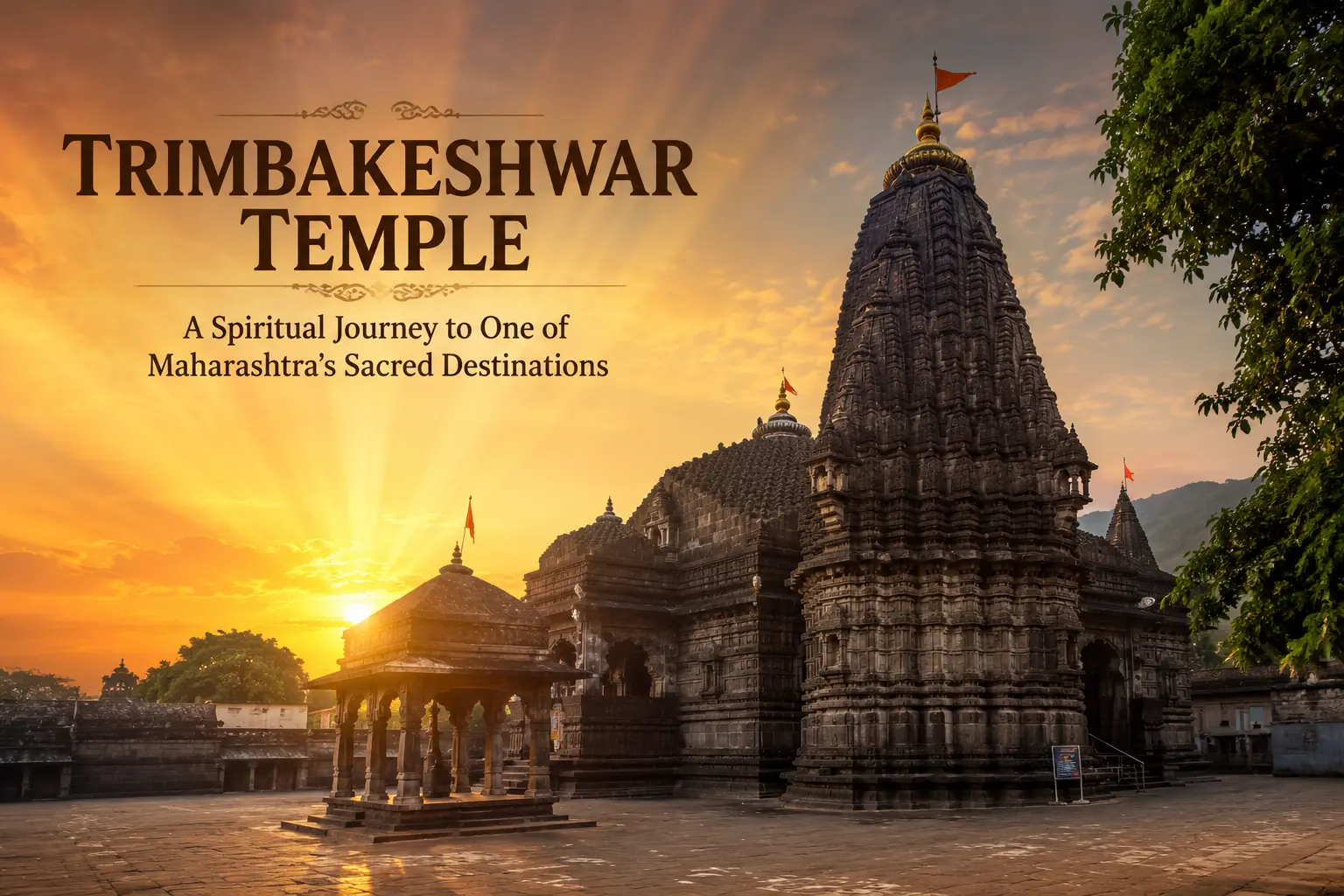
Peshwa Balaji Bajirao built the present temple in the 18th century on an existing site. This temple is mostly constructed using black stone and is ornamented with elaborate carvings, a unique shikhara, and a temple complex.
The builders constructed the existing temple in the 1740s–1760s, with doors at all four corners. The temple also has a rich cultural history, with numerous myths and legends surrounding its construction and history.
In Hindu mythological texts, sage Gautama performed penance by worshipping Lord Shiva. It is also believed that Lord Shiva appeared here as a Jyotirlinga with three faces, which symbolise three deities: Brahma, Vishnu and Shiva.
Why Trimbakeshwar Matters to Pilgrims
To the devotees, the significance of Trimbakeshwar is the blend of sacred mythology and living religious practices. Devotees come to the temple to pray to Lord Shiva, do the abhishekam, and perform other rituals.
The temple is particularly lively on important festivals and auspicious days. Pilgrims enjoy engaging in the traditional practices and have an opportunity to conduct rituals worshipping Lord Shiva.
Daily worship is an integral component of the pilgrimage experience. The morning and evening worship, abhishekam, aarti, and certain other rituals are part of the traditional ceremonies. Religious practices and festivals are held regularly by the Trimbakeshwar Devasthan Trust.
This temple town is also home to several festivals and religious celebrations throughout the year, including the Maha Shivaratri festival, which takes place in February, and the Manasa festival in May. Other festivals include Shravan celebrations, Kartik festivals (which happen every twelve years), and Nag Panchami.
The other holy site at Trimbakeswar temple is the holy Kushavarta Kund. The kund is traditionally associated with the Godavari, and ritual bathing at the kund is thought to purify the soul. Visitors or devotees must follow local rules and safety instructions while participating in religious activities at this place.
Spiritual Rituals and Pujas at Trimbakeshwar
A large number of devotees participate in spiritual rituals and pujas at Trimbakeshwar. Devotees perform various pujas and abhishekams around the shrine and conduct special pujas on auspicious days and during festivals.
Devotees perform some pujas and abhishekams around the shrine, with pandits conducting special pujas on auspicious days and during festivals. The ceremonies offer a chance for believers to show their faith in their deities by offering prayers, gifts, chanting, meditation, and conducting other religious practices.
The majority of devotees see the benefit of a ritual in conducting prayers, having discipline, faith, and reflection as per the guidelines of divine tradition.
Kaal Sarp-Related Religious Rituals
Devotees perform Trimbakeshwar Kaal Sarp Puja when they believe that a specific planetary alignment involving Rahu and Ketu can cause difficulties in their lives.
Two religious rites associated with the Trimbakeshwar temple include Kaal Sarp Dosh Nivaran Puja and Narayan Nagbali Puja. These rituals are traditionally performed with faith, and they are meant to provide spiritual comfort to those who perform them, while also acknowledging the various interpretations of Vedic astrology.
In traditional astrology, interpretations of Kaal Sarp Dosh can vary among different schools. Experienced astrologers usually suggest remedial rituals by studying the horoscope or birth chart of the concerned devotee.
The ritual may include sankalpa, preliminary purification, invocation of deities, mantra recitation, offering, abhishekam, and homa, depending on the type of ritual. If you are thinking about going to Kalsarp Pooja Trimbakeshwar, it is important to know what to expect and choose an experienced pandit who knows these traditions or rituals.
The spiritual goal is normally to find God’s grace, inner balance, and reassurance, even though you should not expect a specific change in your life situations.
Why the Location Adds to the Experience
The atmosphere of Trimbakeshwar plays a major role in the spirituality of the place. The temple stands close to the Brahmagiri Hills, and the surrounding area offers a natural environment for prayer, pilgrimage, and contemplation.
The Brahmagiri, Nilagiri, and Kalagiri hills surround the Trimbakeshwar temple and further enhance the scenic and spiritual ambience of the region. The atmosphere of this place is ideal for spiritual tourists, who can take their time to reflect on their lives.
The visit can be meaningful with temple darshan, time spent at the sacred river banks, and exploring nearby religious and natural sites. It is important to be respectful of local customs, particularly when entering temple premises or when engaging in rituals.
Best Time to Visit Trimbakeshwar
October to March is a good time to visit Trimbakeshwar as the climate is favourable for sightseeing and pilgrimage. Planning trips in the season can ensure participation in temple activities and engaging with local sightseeing opportunities.
These months are the best time for a comfortable visit to the temple. The monsoon season from June to September makes the surrounding hills lush and green, although the weather may affect travel and outdoor activities.
People who want to discover the town of Trimbak during important religious festivals can visit this place during Maha Shivaratri, Shravan, and other festivals. During these festivals, you can have a more comprehensive understanding of the spiritual culture of this town.
Nearby Attractions to Explore
Visitors or devotees can extend a trip to Trimbakeshwar to include several nearby attractions. Brahmagiri Hill is also notable for its connection to the birthplace of the Godavari River and provides a mixture of religious significance and natural beauty.
The surrounding areas of Trimbakeshwar offer opportunities for visitors or devotees to not only experience the temple worship, but also explore the culture, scenic beauty, trekking, and local heritage of these places.
For those who enjoy trekking and the natural beauty of the area, Anjaneri Hill is another place to visit. Travellers can also explore Nashik’s religious heritage, including Kalaram Temple, Sundarnarayan Temple, Panchavati, and Ramkund.
Visitors planning a broader itinerary around Trimbakeshwar and Nashik can include Sita Gufa, Dugarwadi Waterfalls, Pandavleni Caves, Saptashrungi Temple, and Harihar Fort, which is also known as Saka Vriksha. These places allow you to combine the pilgrimage with heritage exploration, nature experiences, and cultural sightseeing.
Useful Tips for Visitors and Pilgrims
Devotees should ensure their visit to the temple by having information about ritual timings and having prior information about the temple before travelling, especially during festivals and in exceptional weather conditions.
During peak pilgrimage seasons, planning allows visitors to plan their queues, stay, travel, puja, and know-how about temple rules.
During the peak pilgrimage seasons, there is a huge rush of devotees, so it is a good idea to plan. It is important to dress in modest and comfortable attire and observe temple guidelines pertaining to wearing shoes, using cameras, maintaining queue lines, making donations, and having information about restricted zones.
A devotee arranging a special puja should contact an experienced pandit to learn about the specific ritual he or she will perform, the required materials or items, and the overall price before conducting the puja.
You should not believe in unrealistic claims about the effects of astrological remedies. Religious practices may have significant personal and cultural significance, but the perceived benefits vary from person to person.
Visitors or devotees should also take enough time to visit the temple and surrounding places, and not make the temple a hasty stop when you want to explore the other places. A slower pace offers a chance to savour the atmosphere, architecture, religious traditions and natural beauty of this historic pilgrimage town.
Conclusion
The Trimbakeshwar Temple is a testament to the convergence of faith, mythology, architecture, and nature. The temple is also the abode of one of the twelve Jyotirlinga temples of Lord Shiva and a sacred place on the banks of the River Godavari.
This temple town is particularly attractive to those who enjoy spiritual tourism with its daily worship, traditional pujas, historic surroundings, and its proximity to hills and other sacred sites.
With careful planning and an open mind, devotees can discover more than just a sacred shrine; they can experience the living landscape of Trimbakeshwar, where centuries of devotion and tradition have left their mark.
With respect, realistic expectations, and interest in its cultural context, your trip can be a meaningful exploration of the spiritual heritage of Maharashtra.