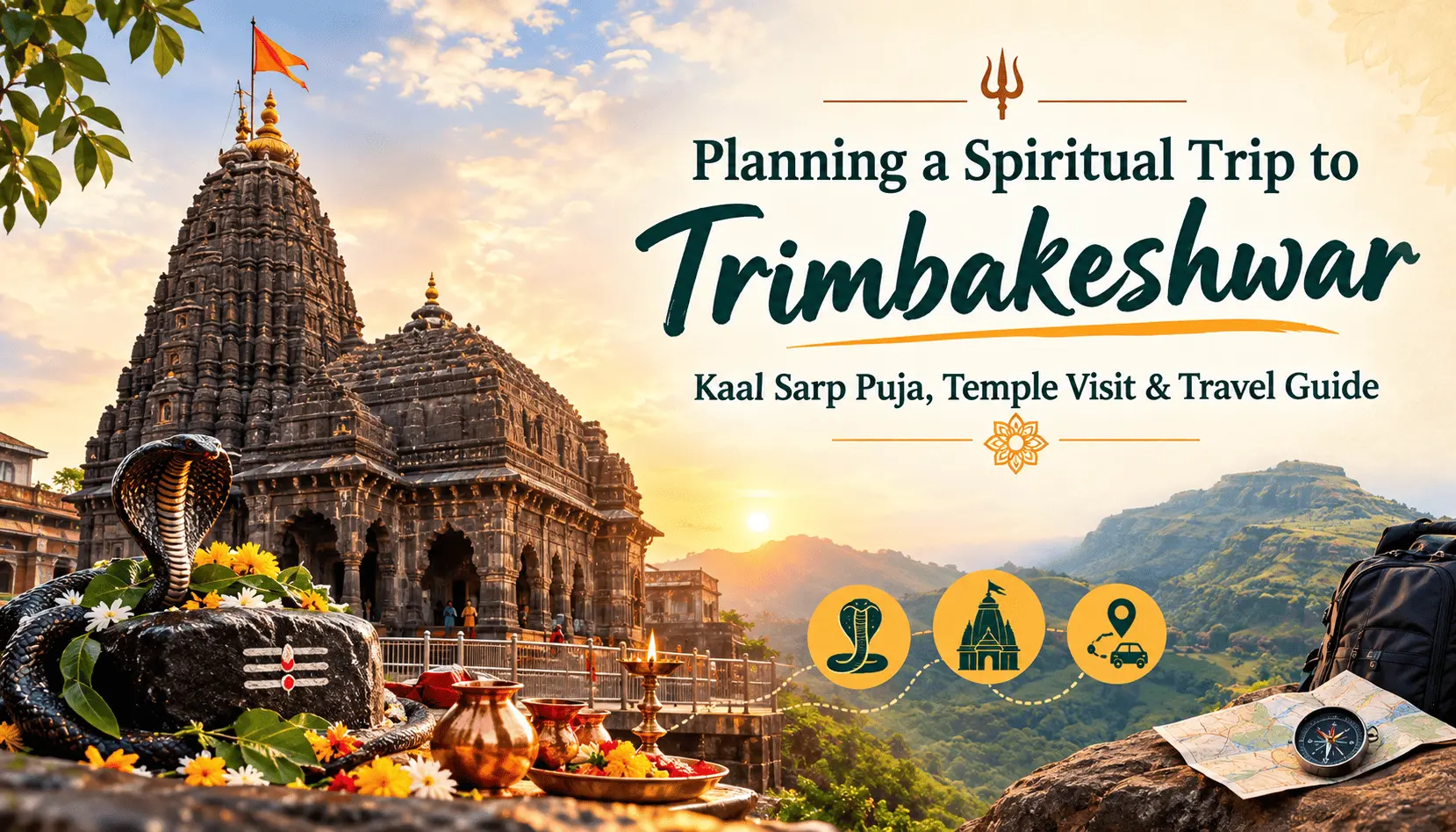
Planning a Spiritual Trip to Trimbakeshwar: Kaal Sarp Puja, Temple Visit & Travel Guide
Introduction
The spiritual visit to Trimbakeshwar is a blend of temple worship, traditional rituals, and an exploration of India’s religious heritage. The town of Trimbak is near Nashik, home to the revered Trimbakeshwar Temple, one of the 12 Jyotirlingas of Lord Shiva.
Trimbakeshwar also holds significance as a pilgrimage site, with the Brahmagiri Hills and the sacred Godavari flowing nearby. Devotees visit the temple for darshan and to conduct kaal sarp dosh puja during their visit.
Before travelling to Trimbakeshwar, you should make arrangements for the puja, learn about the puja procedure, choose an experienced pandit, and arrange local transport and accommodation near the temple.
Why Trimbakeshwar Is an Important Pilgrimage Destination
Trimbakeshwar Temple and Lord Shiva
Trimbakeshwar Temple is the centre of the town’s religious activities. The temple houses one of Lord Shiva’s 12 Jyotirlingas and stands about 28 kilometres from Nashik.
The third-generation Peshwa Balaji Baji Rao built the temple during the eighteenth century to replace an earlier shrine. The traditional beliefs in Hinduism assign a unique character to the shrine by linking the three faces of the Jyotirlinga to Brahma, Vishnu and Shiva.
This temple is also an architectural marvel for its black-stone construction and intricate workmanship.
Brahmagiri Hills and Kushavarta Kund
The Brahmagiri Hills are part of the sacred landscape of Trimbakeshwar. This holy place is also associated with the origin of the Godavari River and Kushavarta Kund, which are significant places for pilgrimage. These sites provide devotees with the chance to explore the town outside of the main temple.
What Is Kaal Sarp Puja
Kaal Sarp Dosh, also known as Kaal Sarp Yoga, is a phenomenon occurring in a person’s life as per Vedic astrology. Kaal Sarp Dosh is generally described as occurring in the birth chart of the concerned individual due to the positioning of Rahu-Ketu in a planetary setup.
In astrology, astrologers consider Rahu the lord of desire, ambition, attachment, and worldly concerns, while they consider Ketu the lord of detachment, introspection, and spiritual inquiry.
Astrologers interpret the significance of this configuration or placement differently, and they should analyse it after studying the horoscope of each individual known to have Kaal Sarp Dosh.
Some devotees opt for a similar ritual after seeking advice from an astrologer or a pandit. The original intent is typically related to prayer, spiritual comfort and praying for mercy from God.
Devotees perform Kaal Sarp Dosh Puja as an expression of religious and astrological faith, but they should not consider it scientifically proven or a guaranteed remedy for personal issues.
Kaal Sarp Puja Trimbakeshwar – What to Expect
The first step in the planning of Kaal Sarp Puja Trimbakeshwar is the determination of the date and the appropriate muhurat. This may be different depending on the concerned pandit’s suggestion, tradition, and circumstances.
General Puja Sequence
During a traditional puja, devotees first cleanse the place where they will perform the ritual and bring the necessary items, including flowers, incense, lamps, fruits, water, and offerings.
The first step involves the devotees praying to Lord Ganesha to get rid of obstacles and bless them for the ritual. The pandit or devotee then recites a sankalp, which is a declaration of the intent for the puja and prayers to the deity of choice.
After this, devotees invoke the deity by offering water, flowers, sandalwood paste, incense, and sacred food. The mantras and prayers are a significant part of the ceremony. Throughout the ritual, the devotees need to have a calm and respectful attitude.
Typically, the end of the ritual involves offering naivedya, performing aarti and seeking the blessings of the deity. The pandit usually chants mantras and also provides a brief explanation of the meaning of the ritual.
Traditionally, devotees pray and utter thankful words before ending the puja. In some ceremonies, the pandit gives the devotees holy water/teertham and prasadam/holy food to the devotees and their participating family.
The order of the activities may change depending on the deity, temple tradition, and the objective of the puja.
Some rituals may also involve giving certain offerings, homam, or conducting other prayers. The devotees must take the advice of the pandit and perform the rites sincerely and with devotion.
Time and Puja Samagri
The length of a kaal sarp dosh puja can vary widely, so devotees should enquire about the approximate duration of the puja. You should also wear traditional clothing and bring or purchase necessary things or puja samagri before travelling to Trimbakeshwar temple.
How to Choose the Best Pandit in Trimbakeshwar
Choosing an experienced and learned pandit is an important part of planning the ritual. Rather than relying on claims made by individuals as the best pandit in Trimbakeshwar, consider the practical and traditional qualifications of the concerned pandit before choosing him to conduct the puja or rituals.
You should look for a pandit with experience in Vedic rituals and mantras and with the ability to conduct the rituals properly. You should confirm the charges, inclusions, timing, samagri/things required, and any horoscope consultation before travelling to Trimbakeshwar.
An experienced pandit will communicate openly with you and explain why they recommend a particular ritual. You should be cautious about anyone promising guaranteed financial, marital, health, or career results by conducting a religious ceremony.
Things to Know Before Visiting Trimbakeshwar Temple
Some practical things to know before visiting Trimbakeshwar Temple include-
Temple Rules and Dress
You should wear modest and comfortable clothing recommended for a place of worship. You need to follow the temple rules and policies regarding footwear, queues, offerings, restricted areas, mobile phones, and photography.
Darshan Planning
You should plan to have ample time for darshan as queues may grow longer during festivals and weekends as well as during other pilgrimage seasons.
Visitors or devotees should check the temple’s latest schedule on its official website or through other official sources before visiting Trimbakeshwar. If you arrange a puja for the same day, you should plan a gap of a few hours between darshan and the puja.
Places to Explore Around Trimbakeshwar
- Kushavarta Kund
Kushavarta Kund is a sacred site of importance due to the origin of the River Godavari. Kushavarta Kund lies approximately 400 metres from the Trimbakeshwar Jyotirlinga Temple.
- Brahmagiri Hills
The Brahmagiri Hills provide the natural element in the pilgrimage. The devotees can enjoy the landscape and learn about the religious importance of the Godavari. You should always check the weather conditions before undertaking any activity of climbing Brahmagiri Hills.
- Anjaneri and Nashik
Travellers or devotees who want to experience spirituality and nature will find Anjaneri, which is a Hindu name for Lord Hanuman, as a place of serenity. Devotees can explore Nashik town and its nearby places like Pandavleni Caves, Ramkund, Sundarnarayan Temple, Kalaram Temple and Panchavati.
How to Plan a Trimbakeshwar Spiritual Trip
- Before Travelling
You need to select dates and know about temple rules and timings before booking your accommodation. In case of conducting puja, you need to get confirmation from the pandit whom you choose to conduct the puja about the date, muhurat, procedure, duration, charges, place and samagri requirements.
In case a horoscope consultation is part of your trip, you need to have all the necessary kundali or birth information on hand.
- During the Visit
You should allow sufficient time for darshan and local travel. You should arrive at the puja venue taking into account the temple timings for conducting the puja. You should be punctual and have all agreed requirements in place.
- One-Day Spiritual Itinerary
Start your spiritual day early in the morning at the sacred Trimbakeshwar Temple. Come for darshan in the morning and spend some quiet time praying on the temple premises.
After visiting the temple, you can travel to Kushavarta Kund, which pilgrims consider the source of the Godavari River and an important pilgrimage site.
You can then visit nearby spiritual sites and have an easy breakfast at a local restaurant. You can have ample time for prayer, reflection and exploring the rich spiritual heritage of the town of Trimbak.
After your lunch, you can explore the local temples and sacred sites at Trimbak, thereby continuing your spiritual journey. You can also explore the Brahmagiri Hills, which are also of religious significance and provide a tranquil environment for meditation and reflection.
You can come back to Trimbakeshwar in the evening to participate in the rituals of the temple. Before you end your trip, relax and stroll around the town and buy some traditional devotional items/things or souvenirs from the local stores.
You can have a simple meal of supper and a final prayer for the day. This tour offers you an opportunity to worship, enjoy the culture, and have spiritual moments without being exhausted.
Best Time to Visit Trimbakeshwar
The milder weather of the season makes the months from October to March the best time to visit Trimbakeshwar. Even though heavy rainfall could impact roads and outdoor activities, the surrounding landscape may be particularly green during the monsoon.
The festival season gives a greater impression of the religious life of the town, but it also attracts more devotees. For other major events such as Maha Shivaratri, extra arrangements for transport, overnight stays and darshan may be necessary.
The weather can be unpredictable around the hills, so you need to rely on a reliable weather forecast and,d as such, ch plan your temple arrangements before going out, particularly during the monsoon season.
Final Thoughts
Trimbakeshwar is a unique blend of pilgrimage, traditional worship, and cultural exploration. Devotees can have a glimpse of the town by visiting the Trimbakeshwar temple, the Kushavarta Kund, the landscape of Brahmagiri, and nearby attractions.
Preparation is as crucial as the ritual for devotees who want to perform Kaal Sarp Puja in Trimbakeshwar. You need to confirm the procedure and muhurat, purchase puja samagri/things, choose an experienced or learned pandit and finally plan for ample time for puja and darshan.
You should travel with sensitivity towards local customs and other rituals. With proper planning, a visit to Trimbakeshwar can bring you a significant spiritual and cultural experience.